Rabbi Dan Lewin · Author & memoir writer

Choose how
you're remembered
told in your words.

I write memoirs the way a portrait painter works: patiently, from life. Through a series of thoughtful conversations, I help you look back, find the connecting threads, and shape a book that sounds unmistakably like you — a legacy for your family and for future generations.

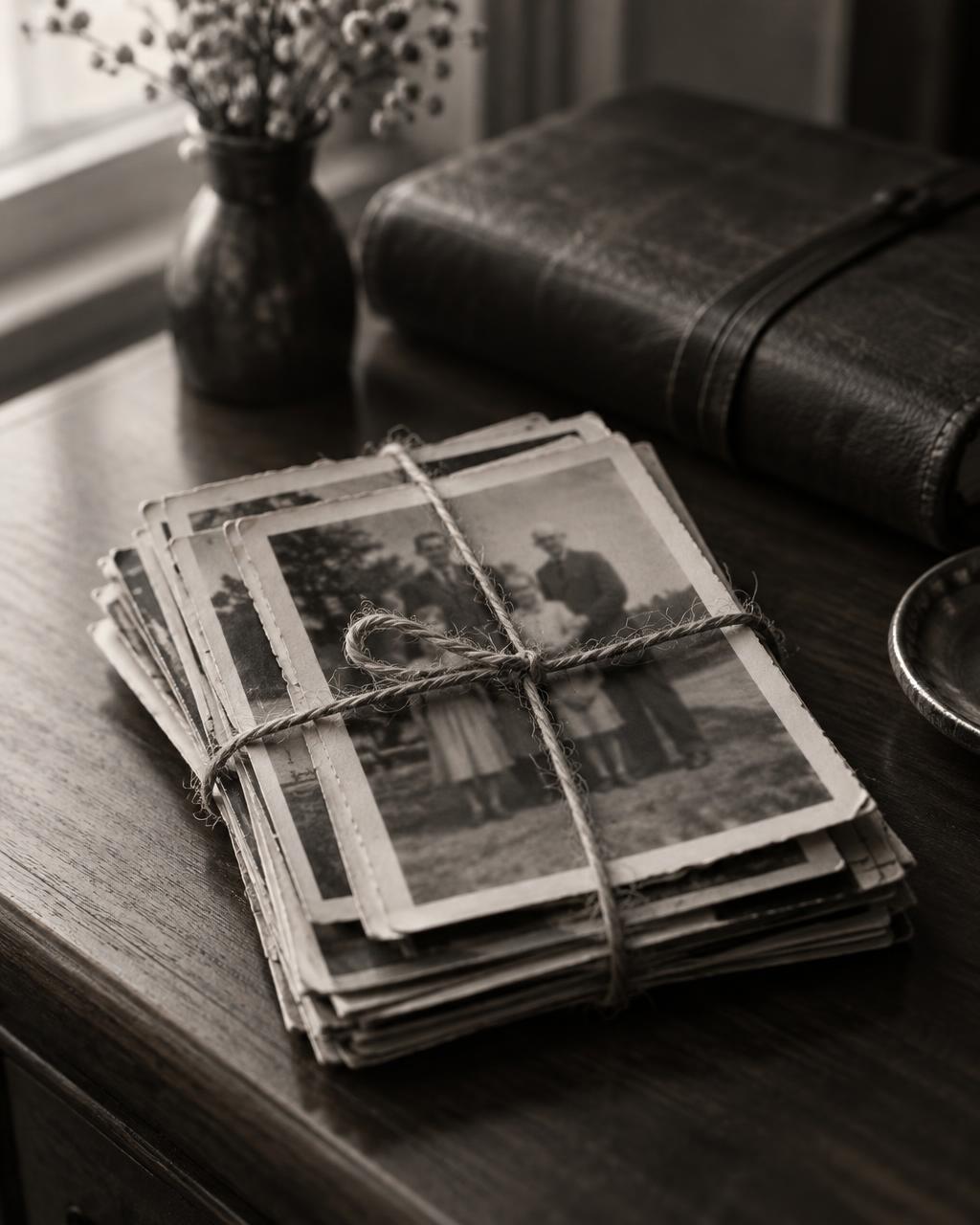
A bundle of old family photographs tied with twine, resting on a desk beside a closed leather journal.

I · Why write a memoir

Most people think a memoir is for the extraordinary few. I see it very differently.

As Flannery O'Connor said, "Anybody who has survived his childhood has enough information about life to last him the rest of his days." The material is already there — buried in the mind until someone sits down to listen.

In these tumultuous times — a world, and America, changing so rapidly — preserving one's family history, personal experiences, and contributions feels more important than ever.

I've never met anyone — especially those who have built companies and succeeded in their fields — who didn't carry a handful of amazing, intense stories, challenges, and wise lessons to share with their children and with the world. What often seems an ordinary life holds remarkable experiences; if they aren't recorded properly, those golden moments will be lost forever.

01

The lessons behind your decisions.

An accomplishment tells us what someone achieved, but not what it took to get there. A memoir gives room to the doubts, difficult choices, setbacks, and people who helped along the way — so readers understand not just the result, but the judgment and character behind it.

02

The greatest gift you can leave your family.

Long after we're gone, children, grandchildren, and future generations can hear your story in your own voice — not merely a collection of dates and accomplishments, but an honest portrait of who you were, what you believed, and what you learned. Reading it should feel like hearing you in the room.

03

The process itself is deeply meaningful.

Few of us have the opportunity to step back, reflect on our lives, and tell our story to someone who is genuinely listening. Many clients describe our conversations as therapeutic — bringing clarity, gratitude, healing, and a renewed appreciation for the journey.

04

A chance to shape your legacy.

From a spiritual perspective, a memoir is an opportunity to choose what gets remembered — to reflect on its meaning, shape its narrative, and leave behind not a chronology of events, but the legacy of a life thoughtfully lived.

It’s not a book about you.
It’s a book from you.

Most people will never sit down and write their life story themselves. And even if they did, they wouldn’t know where to begin or how to organize their thoughts — and there’s no human interaction to draw the memories out.

Even when the words come, they still need shaping: a clear structure, a flow from one paragraph to the next and one chapter to the next, the background information and research that make a story a pleasure to read. Written without that, it would be an entirely different book.

So this is not a biography, and it’s not someone else writing your memoir for you. It’s a partnership: your words and your stories, told in your voice, with my skills lent to producing them in the best possible way.

II · How the process looks

As easy and enjoyable as possible — never a burden.

I understand that some days you may feel energized or mentally sharp, and other days not so much. That's perfectly natural. I stay flexible and meet you where you are. We take it one step at a time, at a pace that fits your life. You bring the memories; I do the work of shaping the book.

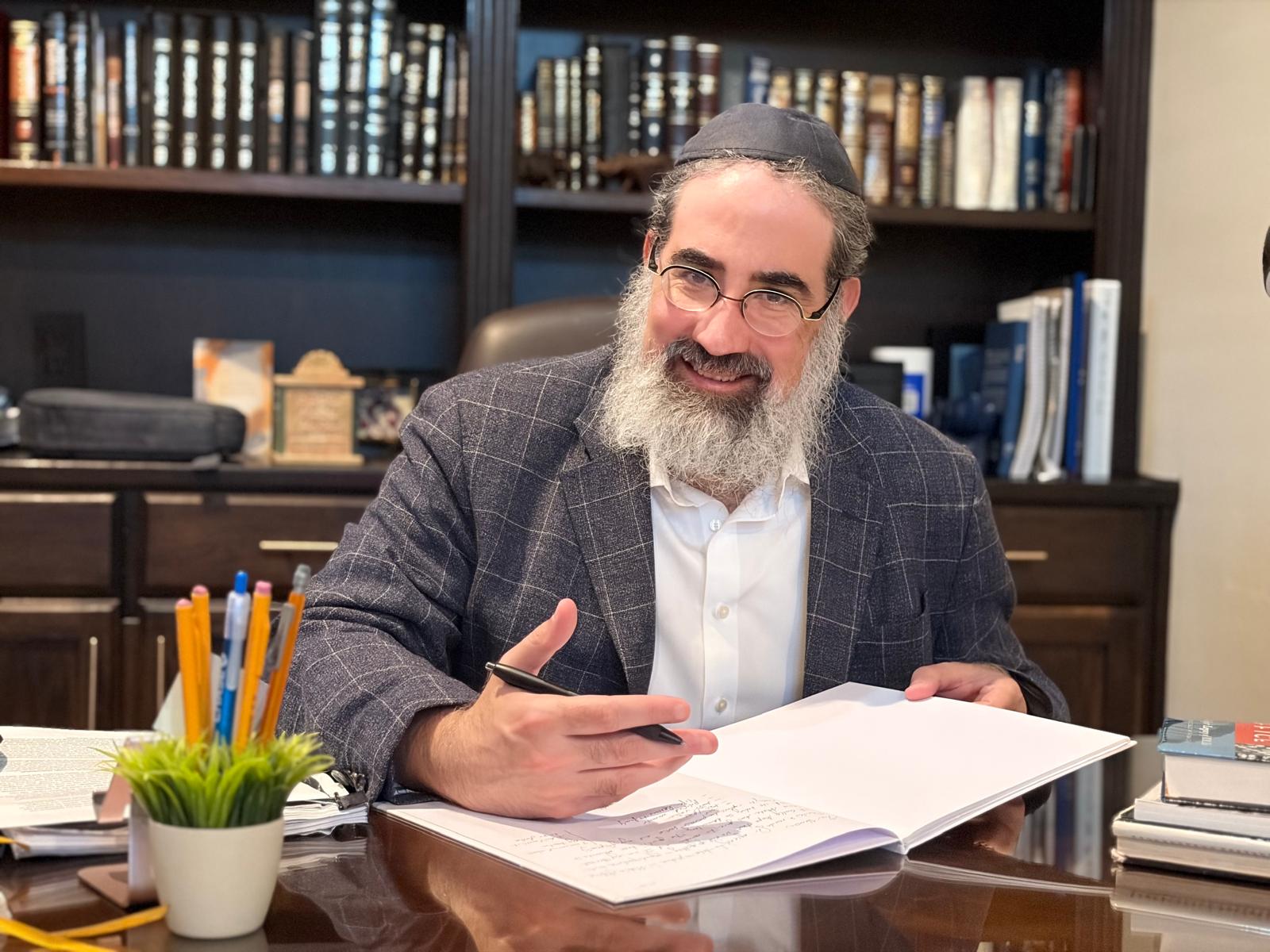
Rabbi Dan Lewin at his desk, pen in hand, before a wall of books.
  1. Phase I.

    Gathering the story

    We begin with relaxed conversations, at a rhythm and length that feel comfortable for you. I ask questions that spark memories and help connect the dots; you don't need to prepare polished answers. Behind the scenes, I organize the material and begin shaping your experiences into scenes and chapters.

  2. Phase II.

    Writing and revising

    I share newly written scenes in small, manageable sections for you to read at your own pace. You can clarify a detail, add a memory, or tell me what feels right. I take care of the writing and revisions, while together we shape a story that sounds like you.

  3. Phase III.

    The finishing touches

    In this final phase, I refine the manuscript, smooth the flow, and add the details that make it feel complete. We review the finishing touches together so you feel confident that the story reflects your life.

III · What you'll get

Not a document — an heirloom, made to be handed down.

A thoughtfully written account of your life — the people, choices, and experiences you want remembered, told in your own voice.

01
A finished, full-length book
A complete manuscript in your own voice — typically 200–300 pages, structured into scenes and chapters, edited and proofed with you at every stage.
02
A beautiful presentation
A memoir should be as beautiful to look at as it is enjoyable to read. I work with skilled interior-layout and cover designers so the presentation lets your story shine. Design, printing, and any production coordination are agreed and priced separately from the writing fee; printed copies are not included.
03
Your photographs, woven in
Family photographs, letters, and documents selected and placed alongside the text — captioned and dated so the story stays anchored in time.
04
Small sections to read along the way
Newly written scenes shared at a comfortable pace, with room for your feedback — so you see your story taking shape without having to review everything at once.
05
A digital manuscript
The final manuscript in digital form, yours to keep and share.

IV · Past projects

A selection of memoirs.

A range of lives — immigrants, industrialists, art collectors, survivors, and family patriarchs. Each book approached as a work of art, built to do justice to a life.

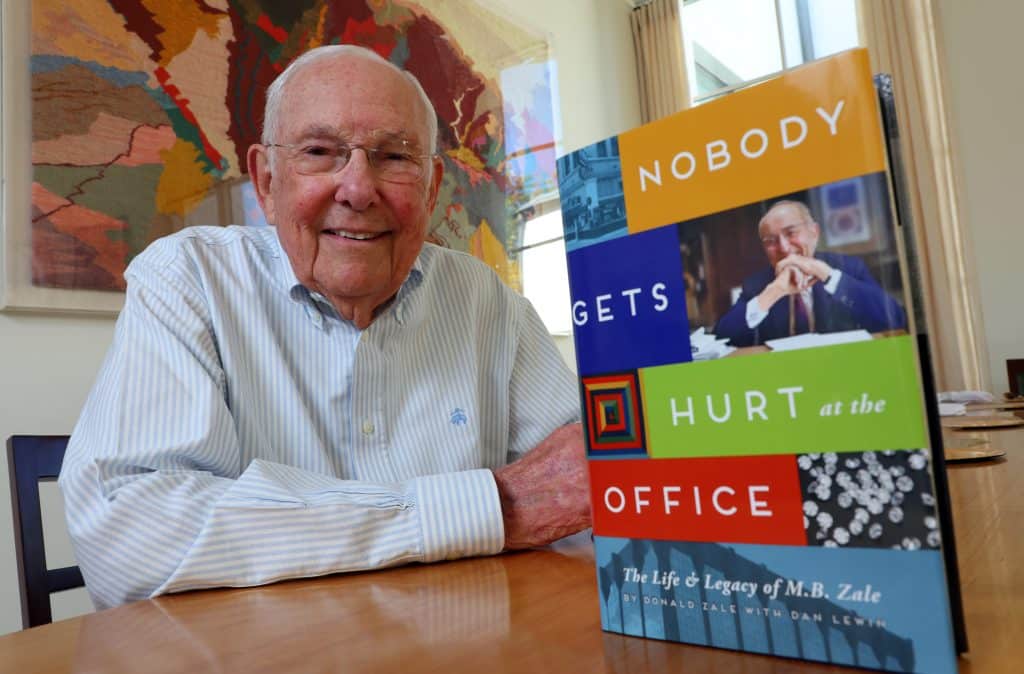
Nobody Gets Hurt at the Office

№ 01
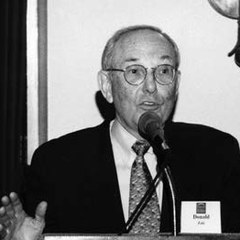
Donald Zale

with Donald Zale · 2023

A father’s retail revolution and a son’s life beyond the CEO’s desk. Donald Zale recalls how M.B. made fine jewelry accessible to everyday Americans, then follows his own next chapter after Zales — building a Blockbuster venture, supporting education, and carrying a family tradition of giving into the next generation.

Failure Was Never an Option

№ 02
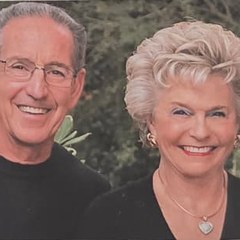
Basil and Dot Haymann

with Basil Haymann · 2019

What do diamonds, digital dentistry, Ironman races, stadium roofs, and organic farms have in common? Basil Haymann. From a tumultuous South African childhood to his first company at eighteen — the first of many — a candid story of unconventional instinct, willpower, and the belief that giving is the fountain of life.

Dreams and Jealousy

№ 03
Jack Repp

with Jack Repp · 2017

“We never cried,” says Jack Repp of the death camps, where he and two fellow prisoners made a pact to stay strong through good memories. After liberation he helped U.S. intelligence track his captors, built a business in Munich, and began again in Greenville, Texas. At over ninety, he finally tells it all.

Strokes of Genius

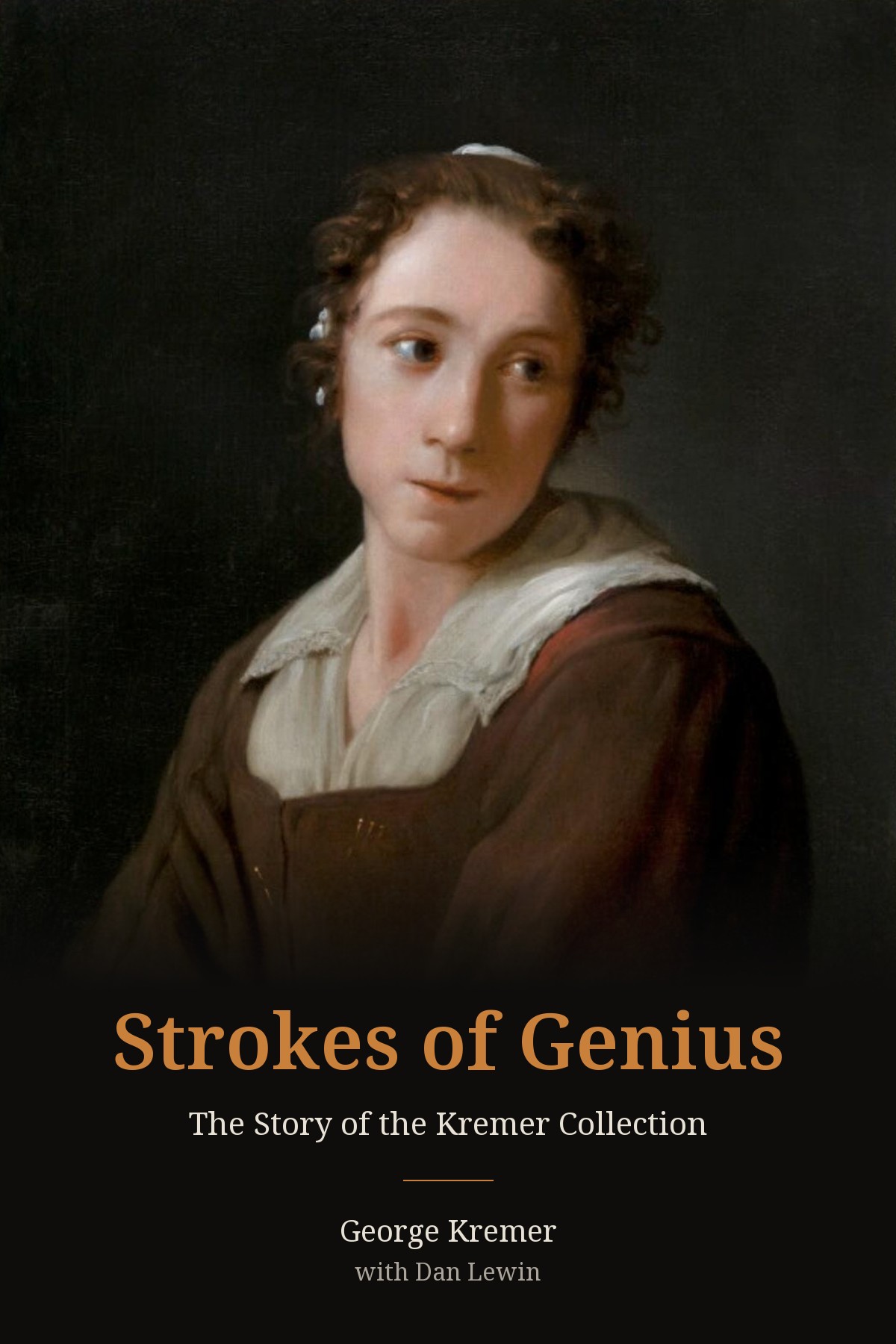
Strokes of Genius

№ 04
George and Ilone Kremer

with George Kremer · 2016

A family that survived the war in hiding in Holland — then the story of George Kremer’s unexpected entry into the art world and the making of one of the finest collections of 17th-century Dutch paintings. Thrilling acquisitions, the hidden world of private collecting, and the dealers who ruled the market.

Getting in Tune

№ 05
Nate Levine

with Nate Levine · 2014

From a rural New York hamlet to business ownership and philanthropy — the mindset of an outsider who kept adapting and learning from others. An open, honest window into the birth of home television and the cable industry, with simple life lessons on people, business, marriage, and positive thinking.

…alongside other memoirs for families, founders, and leaders — each life told with the same care.

VI · Excerpts

The finished memoir should sound like you — so that years from now, your children can almost hear your voice.

Excerpts from the books, so the writing can speak for itself.

Jack Repp

Dreams and Jealousy

2017

The good with the bad

Once upon a time, in the depths of hell, I had a dream and I had a jealousy. I fantasized about the day I could eat one loaf of bread. I was jealous of that butterfly that flew away from a Nazi's boot while I couldn't move anywhere. Today, thanks to the Almighty, I have fulfilled that dream and jealousy in great measure. I received more from life than I ever thought — a loving wife, a nice house, sent my children to good schools and universities, traveled the world, and watched grandchildren grow. And like my father, I operated my own business and was able to help people.

But the pain of the past remains fresh. Every night, before lying down to sleep, I kiss the picture of my parents. I remember all their lessons. When I sit down for Friday night dinner I never touch my food before my Sarah eats, just as my father did. You see, in a lifetime, G-d gives and G-d takes — and he gave me a lot too.

I always say: You have to take the good with the bad, mix it up, and make it all good.

Donald & M. B. Zale

Nobody Gets Hurt at the Office

2023

A once-in-a-lifetime opportunity

Donald recalls M. B.

Once, after we’d decided against an investment, an employee at Zales who was in favor of it remarked, “This is a once-in-a-lifetime opportunity.”

M.B. promptly replied: “You’ll run out of money before you run out of opportunities. There are no ‘once-in-a-lifetime’ opportunities anymore.” He was saying opportunities are abundant. You’re not going to be able to take advantage of them all, so be careful how you spend your money.

Never one man’s success

M. B. Zale

“You see,” he continued, “it’s always been my personal feeling that I could never accomplish a damn thing by myself. I was always looking for people who wanted to operate with me, who could work with me. So the result has been that what you term a success was never one man’s success. And what bothers me more than anything else is that people often think of me as being the one person responsible for the accomplishments of so many people — and that is simply not true.”

I can hire a monkey to wind watches

Donald recalls his father’s lesson

Fully wound watches would usually run for about 26 hours, so you had to be there at the same time each day to wind them or you would need to reset them. That practice taught me great discipline in showing up to work; I needed to be there to wind those bloody watches, because if I arrived late, they would all stop at different times — and then I’d need to reset them all, which was a big pain in the neck.

One morning, after I had been doing this job for a few weeks, my father walked over and, in his quiet, inimitable manner, said, “Look, I could hire a monkey to wind these watches. But as long as you’re going to be winding them, here’s what I want you to do. Turn the watch over and look at the label on the back of it.”

He picked up one to show me. “See this watch? It’s $28.50. But I want you to know why it’s $28.50, and why that one over there is $32.50 — what makes it different from the first one. Or why this watch over here is only $19.95. And if you’ll do that,” he concluded, “instead of just winding them, cleaning them, and sticking them back in the showcase — pretty soon you’ll know something about the watch business.”

That was a great lesson for me in merchandising. By the time I was ten years old, I knew as much about the watch inventory in our stores as anybody working there. …

Integrity, work, and giving back

Donald’s Texas A&M address

First and foremost is the matter of personal integrity. My father would give us the “Look yourself in the mirror” speech. And by that, he meant that you can fool or deceive others, but no one can look at himself in the mirror — stare that reflection down eyeball-to-eyeball — and be untrue to himself.

Then I talked about the importance of choosing work you are passionate about.

Can you imagine waking up every morning for the rest of your career and not being excited about your work? Being unhappy at work, let me assure you, will impact your entire family. You won’t be able to leave your feelings on the job and will surely bring them home. … Make your selection because you love the work. Do what really turns you on and that which you are passionate about. The rewards are great!

Then I talked about the importance of giving back.

Continue to be involved with this great university, with your church, mosque, or synagogue. Support your local hospital, homeless shelter, or symphony. Take a kid to the museum or library. Do something for someone else as often as you can. I promise that you will get more from the giving than you ever got from receiving.

Basil Haymann

Failure Was Never an Option

2019

An unusual proposal

After welcoming everyone, my mother motioned for me to say a few words. I stood, raised my glass to toast the occasion, thanked the guests for coming, and then an announcement slid out of my mouth: “As everyone knows,” I began, “I’ve gone into the jewelry business — and I’ve brought a little sample for a very special young lady here, who knows nothing about this.”

I then turned to face Dot, who was standing beside me, reached into my pocket for a small velvet box, pulled from it a sparkling diamond ring, and placed it on her finger.

The bold gesture was totally unexpected. The crowd gasped, then stood silently, keenly examining the scene as Dot’s eyes widened, her jaw dropping in a mix of shock and elation. My mother was completely caught off guard. Dot’s father scowled with disbelief, furious that I, this brash youngster, had left him in the dark and never bothered to ask his permission. In fact, aside from Barry’s dad, Hacky Starfield, whom I had prepped to capture the moment with photographs, I hadn’t informed anyone.

It’s always been my philosophy never to ask somebody’s opinion unless you’re going to value it. Had I discussed the idea with my mother, for example, she likely would have tried to talk me out of it — so why upset her? Asking Dot’s father for her hand in marriage was never a consideration; since we didn’t get along, I figured my decision had nothing to do with him — and I certainly wasn’t about to give him an opportunity to refuse my request.

Pain is part of life

Pain is part of life, and I don’t run from it or ignore it. That dreadful experience, perhaps more than anything else, molded me into the person I am today. In my eyes, we were living a perfect life and flying high: We had a great marriage, were building a prosperous business together, and had three lovely children. Then boom, in a flash, one of those kids was gone. Being struck with something so severe sent me mentally crashing to the ground. It was a sober reminder of life’s fragility, of how much we easily take for granted.

Specialty people

In this industry, because each job is so unique, you need to have passion. And everyone in our company has a passion for tensile structures. Every project is a challenge. The way you estimate it, the way you design it, all the idiosyncrasies of the job — they’re all so different from each other. But it’s like a piece of art that, when completed, is inspiring.

… We have a long-lasting saying that we’re a specialty company, and with this specialty company comes specialty people. And we now have all the right people in place.

Sharing knowledge freely

Without a family connection, it was rare for someone to enter the diamond-manufacturing business. Those in the industry were reluctant to impart their craftsmanship and skills (usually passed down through generations) to an outsider, lest the pupil run off and compete with them. Erving Schlesinger, however, shared his knowledge freely with me. I suppose he recognized that he had found a sponge, an energetic and ambitious young protégé, thirsty to learn about diamonds on a level that no one else had requested of him.

He taught me how to pick up a diamond, how to examine a diamond and grade it, how to differentiate between good and bad cutting, how to sort stones into colors, how to value them, how to look at the rough, how to mark the rough, how diamonds were polished — everything there was to know about the diamond-manufacturing industry.

Each day, I sat by his side for hours, watching him, asking questions, and absorbing whatever I could, until I knew more than anyone around me. Through his expert instruction and sheer osmosis, Erving was able to impart to me in just a few years what had taken him decades to learn. Not only did he teach me about angles and facets and scintillation — he taught me about life: how to be a better person, a businessman, a husband and father. He cared for me like a son. I was also one of the few people with whom he felt completely comfortable.

Nate Levine

Getting in Tune

2014

My father’s lessons

I can remember only two instances when my father tried to teach me something. The first was how to hang a pair of pants on a hanger by folding one leg over the other, so as to keep the pants from slipping off. The second was how to remove a spot from a piece of clothing, in order to avoid sending it to the dry cleaner. He carefully demonstrated the procedure: scrape the stain with a fingernail in order to loosen it, then place your arm on the spot and rub off the residue with the back of your shirt sleeve, until the spot eventually disappears. These two skills — of profound importance — are all I can remember him teaching me.

Yet because they were my father’s lessons, they stuck. Even today, when Ann says, “Your jacket is stained; send it to the cleaner,” I say, “Oh, no, I’ll take care of it.” I then proceed to remove the stain just as my father showed me, and as it disappears, I smile proudly. Knowing the history behind this little maneuver, Ann always laughs.

Getting in tune

I feel better when I adjust to a given person’s unspoken expectations and come as close as I can to relating to that person, so he or she feels comfortable around me. It’s what I call “getting in tune.”

… From a young age, I looked out onto a distant skyline and longed to accomplish things. And in order to make it to that world — the world I now live in — I had to be ready to learn, to grow and change, to make myself compatible with a different level of sophistication and culture. This wasn’t the way I was brought up, but I learned, a sometimes challenging process. Fortunately, Ann already inhabited that world, which made it easier for me.

You need a hug

One day I was sitting in my office looking over an accounting report. I had a question, so I called my accountant for clarification. “I have a quick question,” I said. “I don’t understand something you wrote here and just wanted to —” “What do you mean, you don’t understand?” he cut me off, sounding frustrated. … “I can’t help it that you can’t understand what I did,” he barked. With that, he hung up the phone.

… I gathered myself, thought for a few minutes, then stood up and stormed down the hall. Reaching his office, I flung open the door, startling him — he jerked back sharply in his chair. Then he sat up straight and stiff, glaring at me as if bracing himself for an oncoming tirade.

“I just want you to know,” I began, “that I found the way that you responded to me to be improper and incredibly impolite. I’ve decided that I know just what you need.” “Oh yeah?” he said insolently. “And what do I need?” I walked closer to him, took a breath, and said, “You need a hug.” I then leaned over and did just that.

To my astonishment, he choked up and almost began to cry. He immediately apologized and began explaining how his wife had been sick, and that he was under tremendous pressure from many directions. When I’d called, he simply hadn’t known how to handle my question.

… Yet that small gesture — showing him that I cared, giving him a chance to explain himself — meant so much. It forever changed our relationship.

George Kremer

Strokes of Genius

2016

A first painting — and a sleepless night

During that visit Boedie showed me a small oil sketch of a bearded man by the Dutch painter Govert Flinck. “This original piece was done by a pupil of Rembrandt,” he explained. … For a novice like me, that appeared to be a good sign: “Wow, this is 350 years old. It’s by one of the great masters. And it’s listed in this book.” I was convinced, and I bought the painting.

Making such an impulsive purchase was extremely uncharacteristic of me. I had never bought original artwork in my life, only some cheap reproductions of colorful modern art (by Karel Appel) to hang in my apartment as a student. Yet there I was, buying the little sketch — and paying real money for it.

I took the painting home, walked in proudly with my purchase tucked under my arm, and showed it to Ilone.

“What is that?” she said. “It’s an original painting by Govert Flinck, a Rembrandt pupil. What do you think?” “I don’t like it at all,” Ilone said.

… When I told her how much I’d agreed to pay for it, Ilone was stunned. It was clear she thought I’d lost my mind. … I couldn’t sleep that night: I had just paid almost $40,000 for a little piece of wood with some paint on it. That was how I felt then.

In retrospect, that decision was sort of a watershed. In a way, that first purchase was the biggest step I would take toward collecting.

But first — it’s not for sale

A few weeks later he arrived at our home in Spain with Interior of a Weaving Mill packed in a large black bag. We immediately unpacked the painting and stood it against the wall where it would hang. We then took it outside and examined it in natural light, which is more unforgiving. Ilone didn’t find it attractive. It was too dark and dull for her.

As we were sitting together, Boedie said, “By the way, I brought something with me that you might find interesting. It’s a beautiful little painting I recently bought, together with Rob, at an auction in San Francisco. But first you should know — it’s not for sale,” he boldly declared. “I only want to show it to you.” Boedie clearly had been instructed by Rob to preface his presentation with “it’s not for sale” to whet the appetite of customers. I nodded and prompted Boedie to continue.

He then pulled out the painting, Bust of an old man with turban. It was only a small panel (26 centimeters/10-1/4 inches high) but had an imposing presence. … Ilone and I barely had any experience, but we liked the painting immensely. The way light fell on the glittering gold thread in the turban, the glowing pink ear, the way the clasp that pins the feather to the turban was painted with only a few dabs of paint, the quick brushstrokes to create the texture of the cloak — everything came together wonderfully!

I did not want Ilone to display any enthusiasm, so as soon as Boedie turned away, I quickly whispered to her, “Niets zeggen” (“Don’t say a word”).

A castle full of temptation

Ilone on arriving at De Groote Mot; George on Rob’s displays

The drive across the border into Belgium lasted around 40 minutes, but time flew by, as everyone socialized and anticipated the nice evening ahead. The buses pulled up outside the gates, and the guests walked the last 150 meters (165 yards) to the castle, surrounded by beautiful gardens and orchards. The driveway leading to the entrance of the Noortman home was lit with candles all along the way. It was dreamlike, a scene out of a fairy tale.

The interior of the home was a combination of elegance and informality. Together Rob and Angelique worked hard to create a warm environment for the guests. Everything was polished and shiny. Rob had carefully selected paintings and decorative works. There were old master paintings and drawings, 19th-century paintings, sculptures, silver pieces, and ceramics.

… Over the years Ilone and I came to understand how Rob operated and planned things to his advantage. For example, from an aesthetic point of view, paintings should be presented against a dark background wall — so the eye sees the painting more clearly. Yet, in his galleries all the walls were off-white. That was because, as he put it, “A painting should never be more beautiful in my place than in the home of the customer.” In other words, he wanted customers to be surprised by the beauty of their painting when they hung it on their own wall — rather than feeling as though the work’s beauty in their home was less than it had appeared to them in the gallery.

Angelique’s exquisite taste was fortified by Axel Vervoort, the internationally renowned interior decorator they’d hired; their private home, in effect, became a showcase for Rob’s business. Hidden agendas lay in every corner. Works were placed in just the right way for people to admire and desire — 90 percent of which were actually for sale.

VII · Testimonials

In the words of the people I've worked with.

What clients say about the experience of writing their memoir — in their own words, with their permission.

“In 2017, I decided to write a book for my children and grandchildren, so that they would understand and appreciate the wonderful life that Dot and I shared for the last 50 years. I had heard that Rabbi Dan Lewin had assisted both Nate Levine and George Kremer in writing their books, so I requested a copy to read. It became immediately evident to me that Dan was a very talented ghostwriter and that he would take this assignment very seriously.

I can honestly say that writing this book has been one of the most rewarding experiences I have ever had. For the very first time in my life, I actually made the time to reflect on my life and career of the last 50-plus years. Having founded eleven different businesses and having closed financial transactions with ten of them, I had never before thought about what it took to be so successful, because as I sold one business, I started on the next.

I would highly recommend Dan for a project of this nature. He is an excellent listener, very methodical, committed, and relentless in establishing all the facts and doing whatever research is necessary. Do yourself a big favor and hire Dan to help you write your book. You will never regret making this decision.”

Basil Haymann·Failure Was Never an Option

“The book we produced is not an introspective autobiography or a tale of how I made money. Many people have told the story of their path to success, and mine is not that remarkable. What I find more significant is what people choose to do with their money.

The formation and evolution of this collection is perhaps a window into some of my personal values. To me, acquiring another painting has less to do with its monetary value and more with an appreciation for the work of art itself. The stories and reflections that follow provide details about art and about us, but perhaps more important, they contain life lessons.

In recounting the story of this collection, my main priority was to make it clear to those who inherit the works that the whole is much more than an accumulation of valuable masterpieces — it is instead a unit, something special built by two people who had a clear vision of what they wanted to achieve. Each painting has a story behind it. Each piece contributes to the whole. There is cohesion.

It was my hope that by sharing these memories, we will ignite not only an appreciation of the passion, sweat, and expertise that went into building this collection but also a greater appreciation of art and a better understanding of how to look at a painting. To our great fortune, we have young grandchildren, and we’re hoping there will be more to come. It is our fervent wish that our children and grandchildren rise to the challenge and keep this collection whole and alive for future generations.

To ensure this story would be an interesting read, I felt strongly that it should be written by an experienced author. When discussing this project with friends in Dallas, David and Reesa Feinstein, they mentioned Dan Lewin, who had taken on a similar project for one of their friends. In addition to being a skilled writer, Dan is a rabbi who teaches adult education in Dallas.

Ilone and I met with Dan, and he agreed to write this story. Dan taped many hours of interviews and essentially completed a crash course in 17th-century Dutch art. We worked closely for more than a year and Dan did an admirable job. He was able to understand our personal journey, put it into words, and make it interesting. We hope the reader agrees. Thank you, Dan.”

George Kremer·Strokes of Genius

“When I undertook the task of putting my life onto paper, I had no idea what the process entailed. I had never before written a book. Countless hours of meetings, transcribing casual conversations and recollections, writing, rewriting, and organizing the material, polishing and editing — crossing the bridge from my original vision to this final product has itself been a journey.

This would not have been possible were it not for the insight and guidance of Rabbi Dan Lewin. I would like to thank him for his tireless commitment to helping me bring these memories to life, his attention to detail, and making sure that we captured and connected all the significant events, while infusing my story with Jewish wisdom.”

Nate Levine·Getting in Tune

“I really enjoyed it — it’s been great. I got much more out of it than I ever put into it. It was such a delight to spend time with my father.

Growing up, the company was obviously a huge part of our lives, but I never worked professionally with my father (though both my siblings did). While creating this book, I had the opportunity to listen and learn things about my dad that I never knew and to appreciate a big part of his life in a way I never would have.

And Rabbi Lewin did an incredible job of telling Dad’s story and our family’s story.”

Dana Gerard·Donald Zale’s youngest daughter·Nobody Gets Hurt at the Office

VIII · Questions

Frequently asked questions.

Can AI do the same thing?+

AI is becoming an increasingly powerful tool for writing and can contribute enormously to the memoir process. It can help organize information, track details, assist with research, refine the writing, and make the work more efficient.

But a memoir is about more than collecting and organizing information. Some of the most meaningful material emerges through human interaction: the exchange of ideas, the follow-up questions, the unexpected memories, and the reflections that develop through conversation. These are often what bring out a person's voice, personality, and perspective.

That is also why the finished book has to carry your voice rather than the machine's. A memoir gives your grandchildren more than the chance to know you. They should hear the times you lived in and the things you went through told in your way of speaking: the rhythm of your sentences, the way you express an idea, the words and the language that were simply yours. Read aloud, it should sound like you are talking to them.

My approach combines the strengths of AI with the human connection and writing expertise needed to turn a lifetime of experiences into a compelling story. AI is a complement to that process, not a substitute for it.

Do I really have a story to tell?+

You don't have to be famous or exceptional to have a story worth preserving. Every life contains experiences, relationships, challenges, turning points, and lessons worth passing on. Sometimes, those stories are so familiar to us that we don't recognize their significance until we take the time to reflect on them.

My job is to help you uncover those stories and bring out what makes your life and perspective uniquely yours. In a world where generations can grow increasingly distant and family histories can be forgotten, preserving that journey is more valuable than ever.

Is the process tedious or time-consuming?+

My goal is to make the process as light and enjoyable for you as possible. Our conversations are the starting point; I handle the work behind the scenes of organizing, researching, writing, editing, and shaping the material into a finished narrative.

Many people find the experience deeply rewarding, and some have even described it as therapeutic. Reflecting on the people who influenced them, the encounters that shaped their lives, and even the regrets and challenges they rarely have occasion to revisit can be meaningful in its own right.

You provide the memories and the perspective. I take care of the heavy lifting.

How long does the process take?+

The aim is always to have the finished book in your hands within a year — whether we're working with highlights from your life or a full-length memoir.

The exact length depends on the volume of material we're working with, which is one of the things we'll settle together in the initial consultation.

What makes a good memoir?+

A good memoir is not simply a collection of facts or a chronological record of events. It lets the reader know the person behind those events. Good writing is clear thinking on paper — and clear thinking is also good communication and a form of teaching, because a well-written book explains a world the reader may never have entered. The challenge is to turn years of memories and experiences into a cohesive narrative, with meaningful connections, natural flow, and a progression that keeps the reader engaged.

That takes a combination of good writing, careful listening, and sensitivity to the person's voice and personality. The finished book should be enjoyable to read while remaining faithful to the person whose life it tells. The goal is not just to preserve a record of your life, but to give your children and grandchildren the opportunity to know you and to hear you — your personality, your values, your influences, and the journey that made you who you are.

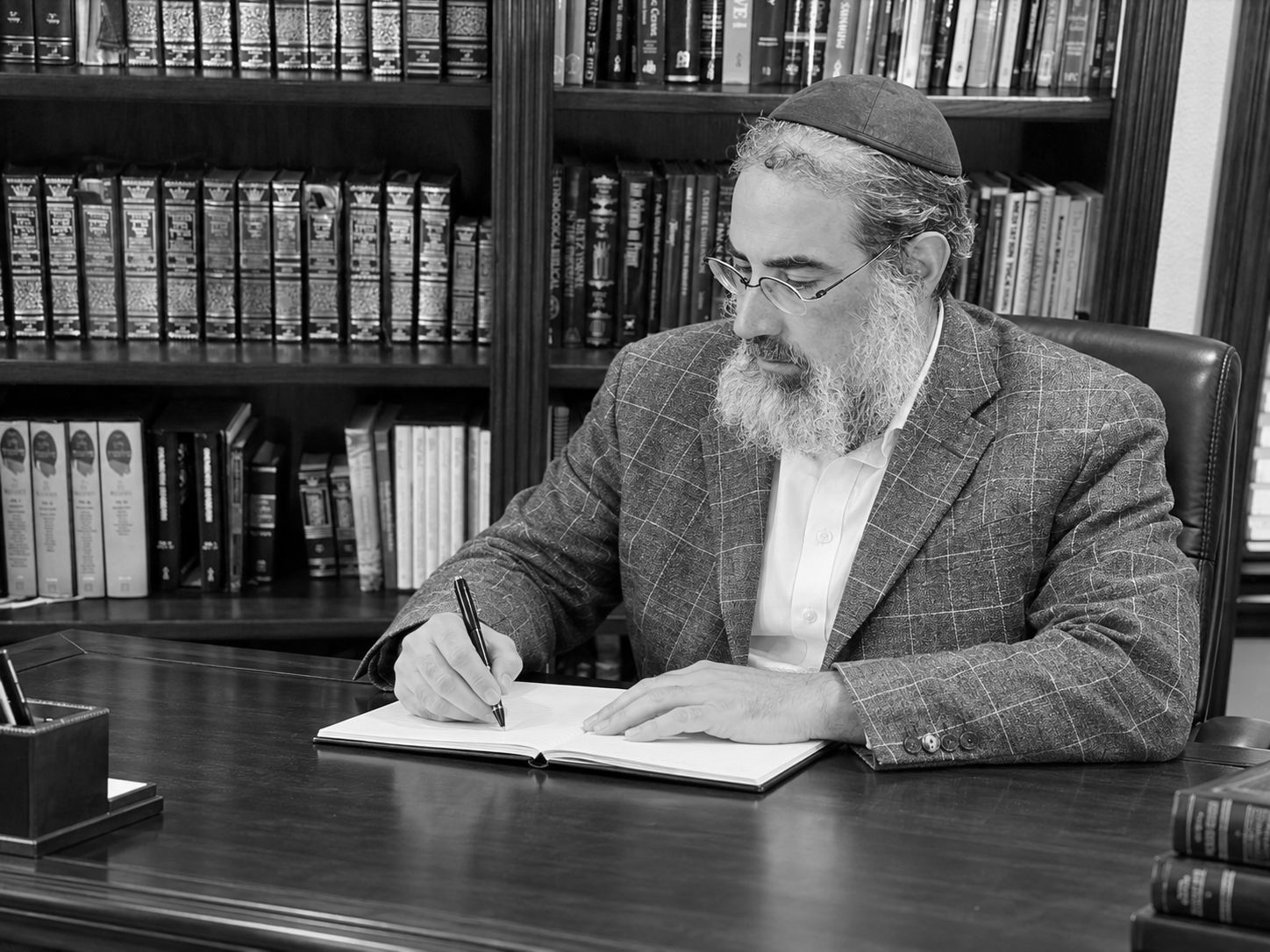
Portrait of Rabbi Dan Lewin at his desk, holding a pen over an open notebook.

IX · About Dan & my approach

I'm Rabbi Dan Lewin.
A rabbi, a teacher, a memoir writer.

A memoir is about more than documenting experiences and recording events. It is about telling a story well and preserving not only what happened, but how you saw it, what you felt, and what you learned.

I have always had a memory for the details of a conversation: the small things people say, the experiences they describe. I am genuinely interested in people and the stories of their lives. My part is to draw out the best of what you have to tell.

As a rabbi, I have spent years listening to people, understanding their experiences, and helping them reflect on the events, relationships, and values that have shaped their lives — skills I use to give a story depth and meaning. As a teacher, I keep the reader in mind at every turn, so the book is understood by someone who knows nothing of your world. As a writer, I make sure it is described well: with color, with life, and in language precise enough to carry one idea naturally into the next.

People talk differently to a good friend than they do to an interviewer, to a blank screen, or to a machine. The best conversations come from personal connection — real exchange, back and forth, the follow-up question that leads somewhere you didn't expect. That is where memories surface that no list of questions would ever find. There is no substitute for that human element; it produces a completely different quality of speech, and of writing. That is my role.

Learning your world is part of the work. Before I can write your story, I make a point of understanding your company or profession and the experiences that came with it, and then teaching it clearly in the narrative, so the book explains as well as it tells. I have done this across many kinds of work: businesses and industries, art, politics, and causes of every view. Whatever the field, my job is to take that information and communicate it to the reader.

There is only one chance to capture a life story this way, and I take that responsibility seriously. Nothing is more fulfilling than seeing someone hold the finished book — a book of their journey, their lessons, and their values, one they are proud to pass on to their children and grandchildren, to friends, and to whoever else they want to share it with. It is the product of a year of work together, and it leaves them knowing their story is now preserved.

Our conversations uncover your story, and the craft of writing brings it to life. Technology helps make the work more efficient.
X · Contact

The first conversation is free.

Tell me a little about the person whose story you'd like written — yourself, a parent, a founder, a friend. I read every message myself and reply personally.

A memoir is a deeply personal project and a significant investment in your family's legacy. In our initial consultation, we'll discuss the scope of your story, the anticipated timeline, and the cost of the project.

Email me directly

mcf.dallas@gmail.com
Send an email

Email is the best way to reach me — we'll set up a call from there.